
Can you have a HydraFacial in the summer? What the science says
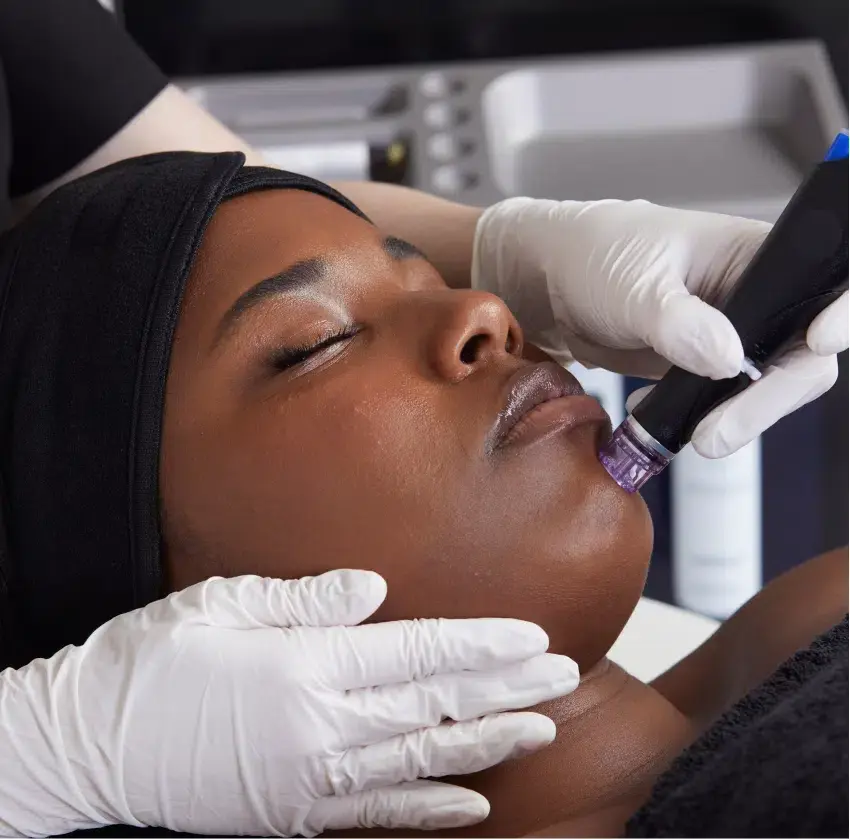
Table of Contents
- How the Zurich summer affects your skin
- The moment your skin starts to get thinner
- How summer skin benefits from it
- Summer exfoliation: yes; laser treatment: no
- How to plan your HydraFacial in the summer
- Not sure what your skin needs right now?
- Frequently asked questions about the HydraFacial in summer
- Sources & Studies
«In summer, it’s best to leave your skin alone.» We hear this phrase every year from May onwards here at alestetics®. Well-intentioned – but wrong. Because it is in summer, of all times, that your skin is under the most strain: up to 80 per cent of visible skin ageing on the face is caused by the sun. The very months when many people want to give their skin a break are precisely the ones when it needs the most protection.
The question, therefore, is not ‘whether’, but ‘what’. And when it comes to the HydraFacial in summer, the answer is: yes, even in the height of summer.
How the Zurich summer affects your skin
Summer in Zurich is intense, and it’s exhausting. An afternoon at Letten, the after-work pool in Lake Zurich, then back to the office – where there’s rarely a proper air conditioner, but instead sticky, dry air. On top of that comes sweat, chlorine from the outdoor pool, and fresh air every day. Sun cream. The pores clog more quickly, the complexion appears duller, and despite the heat, the skin stretches.
Acne is by no means just a teenage problem. It persists in around 12 to 14 per cent of adults, and it often gets worse in the summer.
The bigger threat stays invisible. UV rays trigger free radicals that break down collagen and elastin — the fibres that keep skin firm and elastic. This is right where our HydraFacial in Zurich comes in.
The moment your skin starts to get thinner
A HydraFacial removes the outermost layer of dead skin cells – to a measurable extent, and more than many people realise.
Researchers documented this using a high-resolution imaging technique: before the treatment, immediately afterwards, and two weeks later. Immediately after the treatment, the stratum corneum had shrunk from around 9.4 to 6.7 micrometres – a reduction of almost a third.
This is intentional, as the active ingredients can only be properly absorbed through the exposed surface. It also explains why the skin is more sensitive to the sun in the days that follow. The all-clear lies in the same study: After two weeks, everything had returned to its baseline, with microscopic signs of skin rejuvenation.
How summer skin benefits from it
In the final step, HydraFacial infuses hyaluronic acid and antioxidants into the freshly cleansed skin. Antioxidants are the direct antagonists of the free radicals triggered by UV radiation. A Study in the Journal of Cosmetic Dermatology showed that the method visibly improved skin quality and produced measurable improvements in the tissue, without adversely affecting the deeper layers of the skin. It even increased the skin’s antioxidant content.
And if your skin is prone to summer breakouts: a study in the Journal of Clinical and Aesthetic Dermatology showed clear improvement in active acne over six sessions — addressing the exact problem that sweat and sunscreen worsen in summer.
However, the treatment does require the use of some acid. The second step involves a gentle exfoliation using salicylic and fruit acids. It is a superficial treatment and well tolerated, but it does make the skin more susceptible to UV rays for a few days.
Summer exfoliation: yes; laser treatment: no
A lot of things tend to get lumped together here, and that’s exactly where mistakes happen. «Exfoliation in summer? No way» – that applies to some treatments, but not at all to others.
Gentle, biostimulating exfoliants such as PRX-T33® and BioRePeel® are also possible in the height of summer. They do not visibly wear away the skin and do not cause photosensitivity. Instead, they stimulate the tissue to become active itself.
The situation is different with light and laser treatments. IPL treatments such as the Stellar M22™ and the fractional ResurFX™ laser interact with the pigment in the skin – on tanned skin, this increases the risk of burns and pigmentation issues. At alestetics®, we deliberately schedule these treatments for autumn and winter, when the results are more precise.
| No problem in summer | Better Autumn & Winter |
|---|---|
| HydraFacial | IPL (Stellar M22™) |
| PRX-T33® | ResurFX™ Laser |
| BioRePeel® |
How to plan your HydraFacial in the summer
Don’t come for your treatment if you have a fresh sunburn or irritated skin. If everything feels normal, you’re ready – just avoid any intensive home exfoliation for the two or three days beforehand.
For us, sun protection is an essential part of our daily routine anyway, all year round, because UV rays are the main cause of premature skin ageing. After a HydraFacial, it becomes particularly important for a few days: avoid direct sunlight for three to four days and apply a high SPF sunscreen daily. For the first 24 hours, avoid saunas, intense exercise and hot showers, as heavy sweating can irritate the freshly treated skin.
Do you have an event coming up, or are you due to return to the office after the holidays? Book your HydraFacial two to three days beforehand. That way, any slight redness will have faded and you’ll be looking absolutely radiant.
Not sure what your skin needs right now?
With a free AURA 3D skin analysis, we’ll examine your skin right down to its deeper layers and find out whether a HydraFacial is the right summer treatment for you, or if something else might be a better fit. Book your free AURA 3D skin analysis in Zurich now.
Frequently asked questions about the HydraFacial in summer
Can I have a HydraFacial after a day at the beach or if I’ve got sunburn?
How long before an event should I book my HydraFacial?
Do I really need to use sun cream after a HydraFacial, even if there’s no peeling?
Is a HydraFacial better in summer than in winter?
Which treatments should I put off until the summer?
Sources & Studies
The statements in this article are based on the following scientific publications:
- Razi S et al. (2024). Hydradermabrasion through the lens of Line-Field Confocal Optical Coherence Tomography. Skin Res Technol. PubMed 38558475
- Freedman BM (2008). Hydradermabrasion: an innovative modality for nonablative facial rejuvenation. J Cosmet Dermatol. PubMed 19146604
- Storgard R et al. (2022). Efficacy and Tolerability of HydraFacial Clarifying Treatment Series in the Treatment of Active Acne Vulgaris. J Clin Aesthet Dermatol. PubMed 36569524

Written by
Alexandra Stroganova
Founder of alestetics® · Pre-ageing specialist
Medical cosmetologist · Certificate of competence V-NISSG · Lymph therapist · since 2021
Alexandra founded alestetics® in Zurich in 2021. She works according to the ‘pre-ageing’ philosophy: improving skin quality early on, rather than trying to conceal it later.
Find out more about Alexandra and the team →